Music Production
“Music is the only thing I’ve ever known that doesn’t have any rules at all.”
The following is from my textbook and is simply a helpful guide. Many mistakes are sometimes made between music production and music producer.
What is “music production”?
For those of you who don't know.
The music producer oversees all the aspects of the creation of a song or an album. These can include the choice of song, choice of musicians, instruments, and vocalist(s) and how those instruments are played and those notes are sung as well as where the song or album is recorded. They work with a software called DAW (Digital Audio Workstation). Eg. Logic Pro, Cubase, FL Studio......
“Like a director is to a film, the music producer is to a song.”
Music production is the entire creative and technical process of creating a song, from initial concept to finished product. It combines musicality with technology to create a ready-to-listen recording.
Music production nowadays has evolved along with the rise of technology. Anybody with a computer can create and publish their music to the world. Though there is a lot of freedom on the creators or producers side on the process, the music production can be divided into 6 basic stages: (simple explained)
1. Songwriting/Composing
2. Arrangement
3. Tracking
4. Editing
5. Mixing (Panning)
6. Mastering
But not all producers are good at all of the above-mentioned stages. Some will be good at only a few of them and they usually collaborate with others for the other stages. Especially in the tracking stage where you have to record various instruments and master and mastering which is all about sound engineering and design rather than music, the need for external help becomes a necessity to make the music sound good.
Let me describe the above list as simply as possible. My Studybook, "Music Producer," naturally explains it in much more detail.
1. Songwriting/Composing.


Lyrics
Besides the fact that I mostly make instrumental music I write my own lyrics, and they are always based on events
or experiences of myself or others. Lyrics are the words of a song that are
sung, often including its poetic or narrative content. They refer to the text
that expresses the content, emotion, and story of a songd used in many
different genres of music.
Lyrics include:
The words: The actual sentences and phrases sung.
The story: The details, events, and images that the lyrics describe.
Emotion: The feelings the lyrics convey.
Structure: Often divided into verses, choruses, bridges, etc.
Nowadays, with AI (Artificial Intelligence), you have software that creates/generates lyrics for you by entering some data. Personally? Everyone should decide for themselves, but I personally believe lyrics should come from your heart and feelings, written in your own words, not from a numb device or software that lacks emotion. The same goes for automatically generated music. But...that's just my opinion.
But now we are going further with explaining "Songwriting & Composing".
Songwriting and composing are creative processes that create new music. Although they are often used interchangeably, there is a subtle difference in focus: songwriting usually focuses on songs with vocals and lyrics (pop, rock, folk), while composing is a broader term for the arrangement of sounds, often (but not exclusively) instrumental.
Below is an explanation of both terms and the process.
1. What is Songwriting? Songwriting is the art of creating a song. This includes the lyrics, melody, and chords. A songwriter combines emotion with music to tell a story.
Melody: The sequence of notes the singer sings.
Lyrics: The story or message of the song.
Harmony/Chords: The accompaniment (e.g., piano or guitar) that supports the melody.
2. What is Composing? Composing is the creative process of conceiving and arranging notes into a piece of music. A composer devises new structures, often focusing on harmony, rhythm, and instrumentation. Composing can lead to instrumental pieces (classical, film scores) or complex vocal arrangements.
3. The Core Components (The 7 Elements)
The following elements play a crucial role in both songwriting and composition:
Melody: The hook of the song.
Harmony: Chorus chord progressions that set the mood.
Rhythm: The tempo and pattern of notes.
Lyrics: The meaning and rhyme scheme (if applicable).
Structure: The structure (e.g., verse-chorus).
Dynamics: The volume and intensity (soft/loud).
Texture: How instruments and vocals form a harmony.
4. The Process: How do you write a song? Songwriting isn't just inspiration; it's often also hard work and practice. The process can begin in several ways:
From lyrics: You start with a poem or a sentence and write a melody for it.
From chords: You play some chords on guitar or piano until you find a nice atmosphere.
From a melody: You hum a melody and find suitable chords for it.
Common song structures:
Intro: The beginning, sets the mood.
Verse: Tells the story, the content changes with each verse.
Pre-chorus: Builds tension towards the chorus.
Chorus: The core message, often the most memorable part.
Bridge: A musical and lyrical transition (often before the final chorus).
Outro: The ending of the song.
5. The Difference in a Nutshell
Songwriter: Often writes melody and lyrics, focusing on song form.
Composer: Often writes the music, bringing musical ideas together, often more complex or instrumental.
Arranger: Takes a written composition and writes it out for specific instruments.
6. Tips for Beginners
Write bad songs: The only way to learn is by doing; don't be afraid to write less good songs first.
Use an instrument: Piano or guitar are ideal for combining chords and melodies.
Analyze favorite songs: Watch how your favorite artists construct their songs.
Record everything: Use the voice recorder on your phone to remember ideas.
What are the best moments to write a song?
You can write a song at any time, but the best circumstances often arise when emotion, inspiration, or the need for expression converge. It's a powerful way to express your authentic self, especially when words alone are not enough.
Here are the most favorable circumstances for writing a song:
1. Intense Emotions (Pain, Sadness, or Euphoria) Many songs are born from strong feelings. Pain and sadness often offer deep emotional content. Write when you're overwhelmed and need an outlet for stress or confusion. On the other hand, pure joy can also lead to energetic, danceable music.
2. A Sudden "Happy Accident" (Inspiration) When a melody, phrase, or lyric suddenly pops into your head, that's the perfect moment. Inspiration is fleeting, so try to capture the idea immediately, for example, by recording a voice memo on your phone.
3. For personal reflection or processing Looking back on an event (such as a breakup, a victory, or an everyday experience) is an excellent starting point. Writing songs can help you process situations from your past and give them new meaning.
4. During specific times of the day Early in the morning: Your head is still clear and you haven't been distracted by the day. Late at night: The silence and solitude of the night often help you find focus and offer a different perspective on your music.
5. When you're stuck or want to break a routine Inspiration doesn't always come naturally. Sometimes the best circumstance is right now. By forcing yourself to write (for example, one song a week or a day), you exercise your creative muscle. Even if you think it's not good: writing bad songs is the way to practice and ultimately achieve great results.
6. After seeing other people's creativity Being inspired by other people's music—after a concert or listening to your favorite artists—can instantly energize you to get started on your own work.
In short: The best time is when you feel the urge to tell your story and capture your thoughts. Anything can be a source of inspiration, from a day at school to a trip to the supermarket.
2. Arrangement.

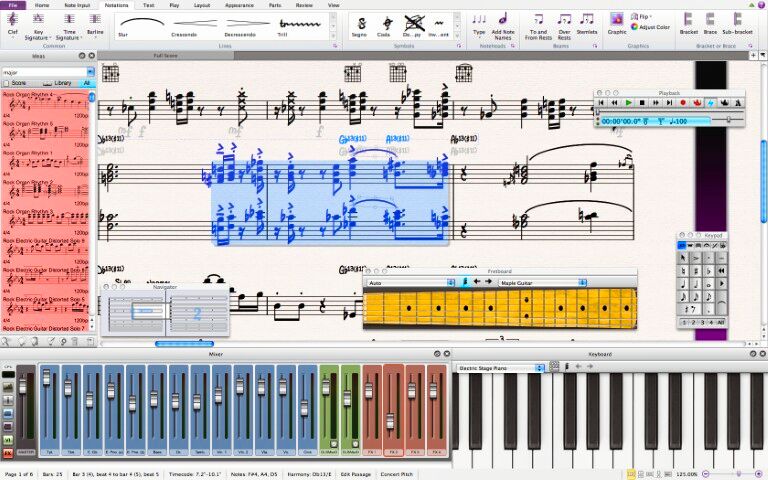
A musical arrangement is the specific arrangement or design of a piece of music, where the foundation (melody and chords) often remains intact, but the interpretation is adapted to a different instrumentation, style, or mood. It is essentially the "dressing" of a composition: the arranger determines which instruments or voices play what, the order of the parts, and the tempo or rhythm used.
Here are the key aspects of the meaning of a musical arrangement:
Adaptation to instrumentation: An arrangement allows a piece originally written for piano to be played by a wind orchestra, a jazz combo, or a pop band.
Structure and composition: The arranger determines the order of a song (e.g., intro, verse, chorus, bridge, outro) to make it interesting.
Change of genre: A classical piece can be arranged into a jazz number, or a pop song into a choral piece.
Instrumentation and color: The choice of specific instruments (e.g., violins instead of synthesizers) determines the "sound" of the arrangement.
Difference from composing: While a composer creates the melody and harmony, an arranger rewrites these existing elements.
Artistic freedom: An arrangement can range from a subtle adjustment to a radical change that gives the song a completely new feel.
In short, an arrangement is the creative translation of a musical idea into a specific performance. It allows familiar melodies to be presented in a new, fresh form.
Here are some examples of famous international arrangements:
Radical Pop/Rock Reinterpretations
Joe Cocker – "With a Little Help from My Friends": A soulful, slowed-down reinterpretation of the Beatles song.
Ike & Tina Turner – "Proud Mary": A funk/soul arrangement of the Creedence Clearwater Revival original.
Vanilla Fudge & Yes: Bands that based their early careers on radical rearrangements of well-known hits.
Ananda Shankar – "Light My Fire": An oriental, sitar-driven version by The Doors.
Orchestral and Classical Arrangements
Richard Wagner's arrangement of Beethoven's Symphony No. 9: A well-known, debate-provoking arrangement.
Quincy Jones – "Back On The Block": Known for intricate vocal arrangements.
Ella Fitzgerald – "Street of Dreams": Well-known, elegant arrangements written by Nelson Riddle.
Scala & Kolacny Brothers – "The One I Love": A choral arrangement of the R.E.M. song.
Gilberto Gil – "Imagine": A bossa nova/world music arrangement of John Lennon.
These arrangements demonstrate how a song can convey a completely new emotion through a different musical approach.


3. Tracking.
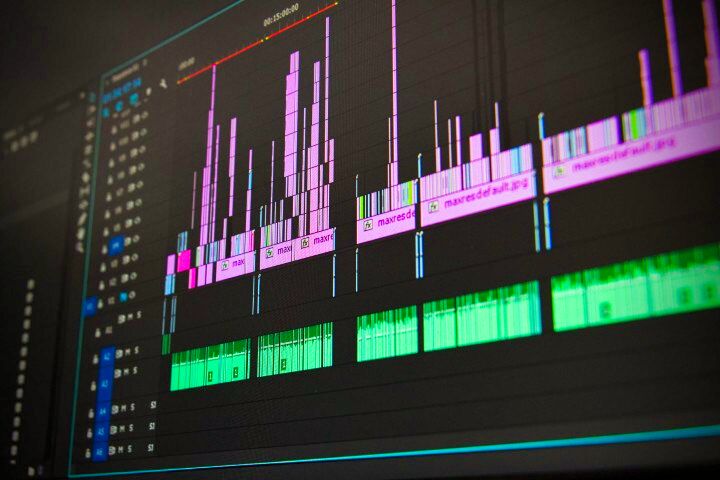

In music production, tracking (also called laying down tracks) is the process of recording individual instruments or vocals onto separate tracks in a DAW (Digital Audio Workstation) or on a mixing console. It's the first and crucial step in the recording process, capturing the raw audio before the final mixing and mastering.
The following are the key aspects of tracking:
Goal of Tracking: The goal is to record each instrument or vocal separately so they can later be edited, adjusted, and produced independently.
Process: Instruments can be recorded simultaneously (live in the studio) onto different tracks, or one at a time (overdubbing).
Process: Tracking often involves recording "dryer" signals, comping (combining the best recordings from different takes), and preparing the recording for mixing.
Difference from Mixing: While mixing determines the balance between the instruments, tracking is the stage where the sounds are actually captured.
So tracking is essentially synonymous with “recording tracks” in a studio environment.
4. Editing.
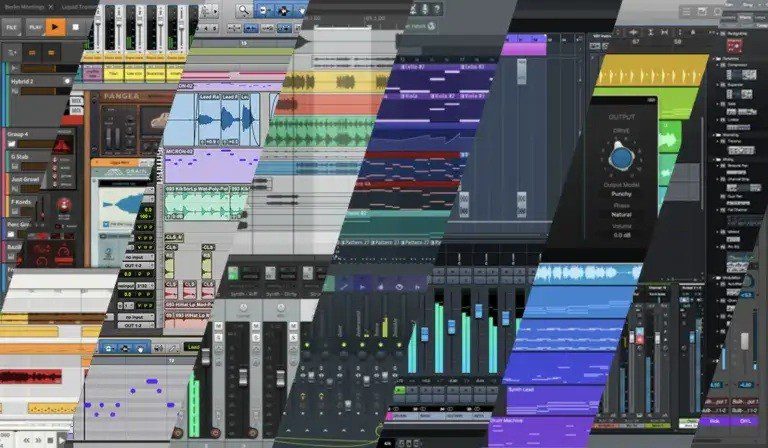

Editing in the music industry is the process of manipulating, arranging, and enhancing audio recordings after they have been recorded (tracking), but before mixing. It's a crucial post-production step that corrects imperfections, removes unwanted noise, and refines the performance to create a polished and cohesive final product.
Here's a detailed overview of what editing entails:
Key Activities in Audio Editing:
Timing Correction (Quantizing): Moving recordings (e.g., drums or instruments) so that they are perfectly in time (tempo).
Pitch Correction: Correcting out-of-tune notes in vocals or instruments (e.g., with Auto-Tune or Melodyne).
Comping: Selecting the best parts from different takes (recording attempts) and combining them into one perfect recording.
Cutting and Pasting: Removing unwanted sections, silences, or breaths, and moving sections.
Fades and crossfades: Gently fade audio fragments in and out or blend them smoothly to prevent "clicks" or abrupt transitions.
Difference between Editing and Mixing:
It's important not to confuse editing with mixing.
Editing is the repair and preparation of individual audio tracks (fixing before mixing).
Mixing is the balancing, volume adjustment, and effect adjustment of the edited tracks to blend them into a single whole.
Why is Editing Important?
Editing ensures a professional-sounding recording. It removes errors from the performance and ensures a clean, tight production. Without proper editing, the mixing phase can be problematic because errors in the recording can be amplified.
Tools:
Editing is done in a DAW (Digital Audio Workstation) such as Pro Tools, Ableton Live, Logic Pro X, or Cubase.
5. Mixing & Panning.


Mixing is the crucial phase in music production, where all the individual recorded tracks (instruments, vocals, drums) are combined into a single, cohesive, and balanced stereo file. The goal is to maximize each element and ensure the track sounds professional on various speaker systems.
Here are the most important aspects of mixing music:
Balance: The volume of each track is adjusted. Vocals often need to be central and clear, while drums form the foundation.
Panning: Sounds are placed within the stereo image (left, right, or center) to create space and width.
EQ: Frequencies are adjusted to make instruments sound less muddy and create space between each other.
Dynamics (Compression): Volume fluctuations in a recording are evened out, ensuring that quiet passages remain audible and loud passages don't interfere.
Space (Reverb & Delay): Effects are added to give the track depth and ambiance, preventing it from sounding flat.
DAW (Digital Audio Workstation): Mixing is usually done in software like Cubase, Ableton Live, Logic Pro, FL Studio, or Pro Tools.
In short:
Mixing is the balancing of the individual tracks.
Tips for better mixes
Mix at a lower volume to prevent ear fatigue.
Try mixing in mono to check the balance.
Ensure good separation between the bass and kick drum.
Panning in music is the process of distributing sound across the stereo image (left and right) during mixing. This allows you to place instruments and vocals in a specific location between the left and right speakers, creating a three-dimensional, spatial soundscape.
Here are the key points about panning:
Purpose: Panning creates separation between instruments, making the mix less muddy and allowing each element to be clearly audible.
Stereo vs. Mono: While a sound in the center (mono) sounds equally loud on both speakers, panning moves the sound by increasing the volume in one speaker and decreasing it in the other.
Typical instrument placement:
Center: Lead vocals, bass guitar, kick drum, and snare are typically kept in the center to keep the mix stable.
Sides: Acoustic guitars, backing vocals, or keyboards are often panned left or right for width.
Techniques:
Hard panning: Panning a sound all the way to the left or right.
Autopan: An effect where the sound automatically pans from left to right (popular in psychedelic rock or electronic music).
LCR (Left-Center-Right): A mixing technique where elements are placed only in the far left, far right, or center.
Using panning effectively makes a track feel broader, more dynamic, and more engaging to listen to.
6. Mastering.