© Copyright 2026 | All Rights Reserved.
If music is central to the education, a man will develop into a philosophical thinker.
What is music copyright?
What Musicians Should Know about Copyright.
As the owner of your music, copyright gives you the right to make and sell copies, distribute those copies, make new works based on your work, and, with some limitations explained below, publicly perform or display the work.
Music copyright protects musical creations from being used without permission, providing legal ownership to creators as soon as their work is recorded or written down.
Here are the key aspects of music copyright:
Two Types of Copyrights:
Every song has two distinct copyrights: the composition (lyrics, melody, music—usually owned by the songwriter/publisher) and the sound recording (the specific audio version—usually owned by the performer/label).
Automatic Protection: Copyright exists immediately upon creation ("fixation")—registration is not required for it to exist, but it is necessary for filing a lawsuit.
Duration: Generally, copyright lasts for the life of the author plus 70 years.
Exclusive Rights: Owners control reproduction, distribution, public performance, and creating derivative works (like remixes).
Licenses Needed:
Mechanical: To record a cover version.
Synchronization ("Sync"): To pair music with video (movies, YouTube).
Performance: To play music in public (radio, restaurants).
Sampling: You must obtain permission from both the composition and sound recording owners to use a sample, regardless of how short it is.
Songs published before 1929 are generally in the public domain and free to use.
How do I write a copyright disclaimer for music?
How to write a copyright disclaimer
the copyright symbol (©);
your name as author and your website's name. It can also be the name of an organization, a business, or a corporate name;
a current year or year range;
a statement of ownership (“All Rights Reserved”).
When I use a copyright song (for whatever purpose...). Can I write "I do not own the rights to this music"?
Claiming that “You do not own the rights to this music” is a myth that does not provide legal protection and can actually highlight the fact that you're using copyrighted music without permission. That claim is just a statement of fact not a legal defense.
Famous music copyright institutions, organizations, and companies are primarily divided into major record labels (which own sound recordings), music publishers (which own compositions), and Performing Rights Organizations (PROs) or collecting societies (which license music usage).
Here are the most prominent, known as the "Big Three" and major global collecting societies:
Major Music Publishing and Record Companies ("The Big Three")
These entities control the vast majority of popular music copyrights worldwide through their recording (label) and publishing divisions.
Universal Music Group (UMG): The world's largest music company, controlling massive labels like Republic Records, Island Def Jam, Interscope, and Capitol Records.
Sony Music Group: Includes Sony Music Entertainment (recordings) and Sony Music Publishing (the largest music publisher in the world).
Warner Music Group (WMG): Major subsidiary labels include Atlantic Records, Warner Records, and Fueled by Ramen.
Major Independent Publishers
Concord Music Publishing: A massive independent, managing a vast catalog including works from Imagine Dragons, Daft Punk, and Boosey & Hawkes.
Major Performing Rights Organizations (PROs) & Collecting Societies
These organizations handle public performance licenses (radio, live venues) and often mechanical rights (physical/digital reproduction).
ASCAP (American Society of Composers, Authors and Publishers): A member-run US organization representing over 450,000 members.
BMI (Broadcast Music, Inc.): A major U.S. PRO representing writers such as Taylor Swift and Lady Gaga.
SESAC: A smaller, for-profit U.S. PRO that also owns the Harry Fox Agency (HFA), which focuses on mechanical rights.
PRS for Music (UK): Represents songwriters and publishers in the UK.
PPL (UK): Focuses on neighboring rights, collecting royalties for performers and record labels in the UK.
GEMA (Germany): A powerful German society handling both mechanical and performing rights.
SACEM (France): A leading French collection society.
APRA AMCOS: Represents songwriters and publishers in Australia and New Zealand.
Specialized Copyright and Licensing Companies
Audiam / Rumblefish: Subsidiaries of SESAC focused on digital copyright administration.
Epidemic Sound / Artlist: Major licensing platforms for content creators (Royalty-free/production music).
SoundExchange: A US organization that collects digital performance royalties for sound recordings.
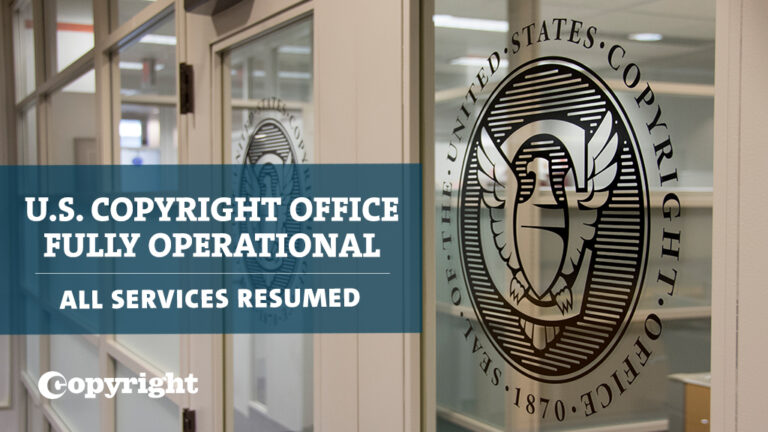
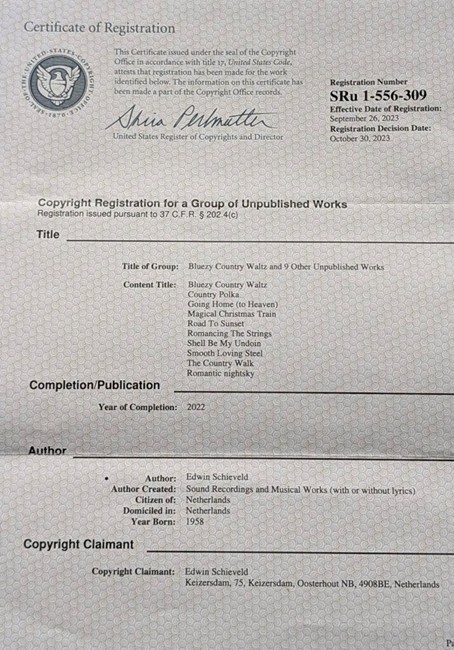
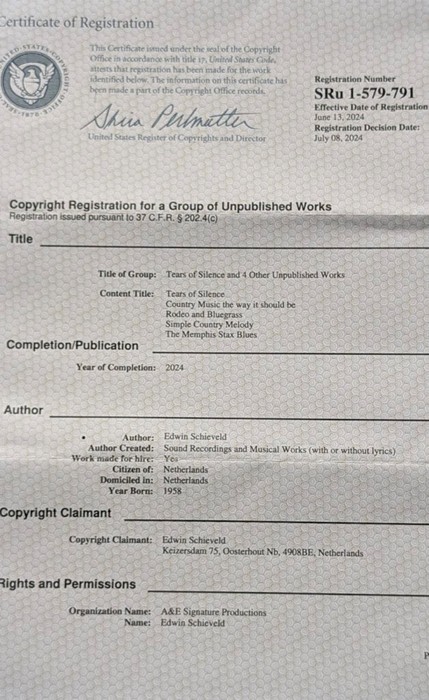
All my music is registered under the USA Copyright Office.
The United States Copyright Office is a federal agency within the Library of Congress that administers the national copyright system. It registers creative works, records ownership documents, and advises Congress on copyright law. The office maintains a public record of copyrighted works to promote creativity and ensure legal protection for creators.
Key functions of the U.S. Copyright Office includes:
• Registration: Examining and registering hundreds of thousands of copyright claims annually, which serves as a public record.
• Policy Advice: Acting as the principal advisor to Congress on national and international copyright matters.
• Recordation: Maintaining records of documents related to copyright ownership, such as transfers.
• Licensing: Administering statutory licensing provisions, including collecting and distributing royalty fees.
• Public Information: Providing information to the public, including a public catalog for searching registered works.
• Dispute Resolution: Housing the Copyright Claims Board, which offers a faster, less expensive alternative to federal court for some disputes.
While it is part of the Library of Congress, the U.S. Copyright Office is a distinct entity and is not the same as the U.S. Patent and Trademark Office.
YouTube Downloads & Copyrights.
Here are the key points regarding downloading copyrighted music from YouTube:
It violates YouTube's Terms of Service: Downloading videos or audio without an official YouTube download button (or a YouTube Premium subscription) violates the platform's terms.
It often infringes copyright: Downloading protected music without the creator's permission is a copyright infringement.
Technically possible via third parties: There are many online 'YouTube to MP3' converters that can extract audio from videos. However, these tools are often very unsafe and may contain malware and/or viruses that can cause serious damage to your PC.
The legal exception (Home Copy): In some countries (such as Belgium and the Netherlands), you are allowed to make a 'home copy' for personal use, but this is a grey area when it comes to bypassing copy protection.
Safe and legal alternatives:
YouTube Premium: This allows you to officially download music and videos to watch offline in the app.
YouTube Audio Library: Here you will find royalty-free music that you can legally download and use in your own videos.
Official licenses: For commercial use of music, you must pay the rights holders.
Conclusion: Although you can easily download music using external tools, you risk legal infringement, expensive claims, and violating YouTube's rules. Using official channels such as YouTube Premium is the only safe way.
You can often legally download copyright-protected music for a few euros via certain streaming services or websites. It is better to pay a few euros than face a claim of hundreds of euros.
Artificial Intelligence & Copyrights
Intellectual Property in Music Copyright.
AI has changed the way music is composed, produced, and distributed. While AI opens the door to new creative possibilities, it also raises important questions regarding the protection of the rights of musicians, composers, and producers. Below, we examine the essential concepts of music copyright and neighboring rights and briefly discuss the impact of AI on these rights.
Copyright is a legal concept that grants exclusive rights to the creator of an original work, including musical compositions and lyrics. It gives the author the right to determine how the work is used, reproduced, distributed, and presented to the public. With AI now capable of generating music, the question arises whether this music created by an algorithm also qualifies for copyright protection.
Who is the true creator?
A challenge with AI-generated music is answering the question of whether it actually constitutes a ‘work’ within the meaning of the Copyright Act and subsequently determining authorship. Traditionally, the human composer is the author of a piece of music, but with AI having the ability to create unique compositions, the question becomes relevant: who is the real creator? I asked ChatGPT a question about this, and not entirely surprisingly, they answered: Legal systems may need to be adapted to recognize AI as an ‘author,’ or to consider those who created the AI as authors. So, AI is already claiming rights!
Publishers and rights organizations: no exclusivity, no money
This question is also relevant for publishers and for collective rights organizations, such as Buma/Stemra. After all, you can trade in compositions and texts, but if there are no rights attached to them because the creator is not human, then it is also difficult to earn money from them. That money is, of course, earned (also) because of the exclusivity to possess the works and the license fees paid to be allowed to use them. No rights mean no exclusivity. No exclusivity means no, or at least much less, money. Moreover, it must also be examined whether the output infringes upon the material used as training data by the AI prompt and, if so, whether there might be exceptions to the rule.
Who receives the revenue, then, if AI creates the music?
While copyright protects the composer, neighboring rights protect those involved in making a recording, such as the artists and producers. If an AI system creates the music, who is entitled to the neighboring rights? Is it the musicians who trained the algorithms, the owner of the AI platform, or the writer of the AI code? For the master owner, there is no creative threshold after which a right arises, as is the case with copyright. It concerns ‘merely’ the initiative and responsibility for a recording. This raises interesting ownership questions. After all, to whom must permission be requested if you want to sample a track or use the music in a video?
To address these complex issues surrounding AI, music copyright, and neighboring rights, legal experts, technological pioneers, and musicians and music companies must collaborate. A multidisciplinary approach. How all this will turn out remains to be seen. Hopefully, good solutions will emerge for this complex matter, which sounds like music to your ears.........or NOT.