About Me
Everyone's Only Religion Is Music
My name is Edwin Schieveld. I live in Oosterhout, The
Netherlands. I was a former Manager Quality Health Safety & Environment.
Making music was always a hobby of mine and after a study of 2 years
(2019-2021) I’m now also a certified music producer. It all started as a hobby.
Later it became more intense because you were so passionate about making music
that you had no sense of the time because it is so much of fun to do it. During
these moments of activity, you were in a different world. Making music is my
passion for many years, and in the past, I played and jammed with friends until
everyone had no time anymore because of family and relationships etc.
I play guitar, Banjo and also play the harmonica. Keyboard learning in progress. I love most of all music and its genres. As a kid I grew up mainly with Traditional Country music (knowing all Country Stars) and besides that also rock & roll, blues, and pop. Merle Haggard was and still is my favourite Country singer.
I also enjoy reggae, jazz, ambient and Celtic music. Of course I love Disco music. “Back to the Eighties”. Most favourite are The Beegees & Michael Jackson. I can appreciate some good R&B, Trance, EDM, Hip Hop and rap music. At special parties, occasions, and certain concerts, I also enjoy listening to Dutch music. Not to mention to love some classical music and movie music productions.
In fact I enjoy all kind of music. Being a “musician” (lover of all kinds of music) is sometimes associated with an open-minded personality, which can be more outgoing and agreeable. I make several genres of music but my preference goes to Country. You are then more or less labelled as a CrossOver artist.
A crossover artist is a musician or performer who achieves commercial success in a genre outside their original or primary style. They bridge different musical worlds—such as classical and pop, or country and rock—to broaden their audience and combine styles.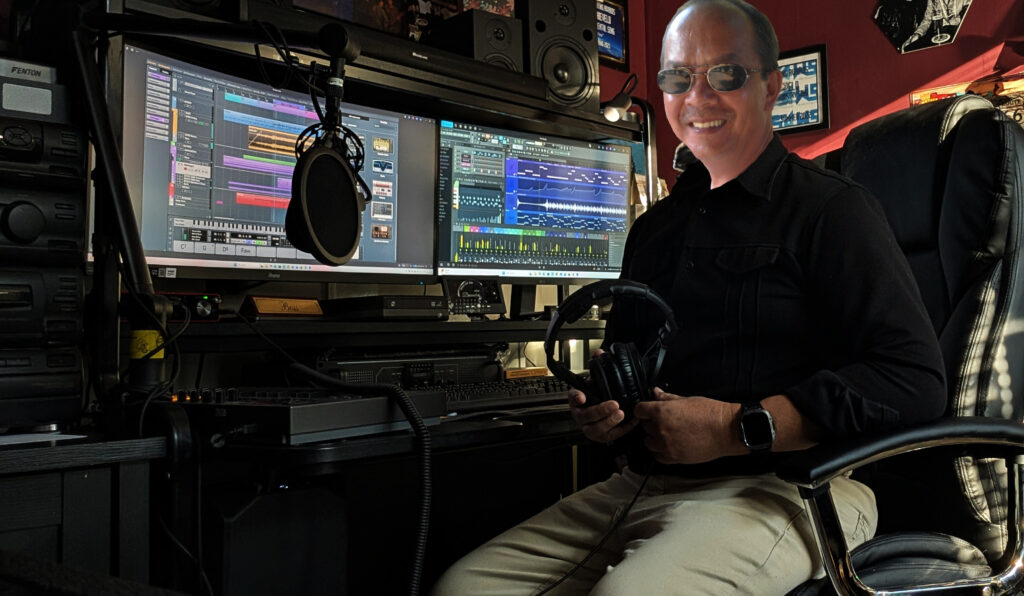
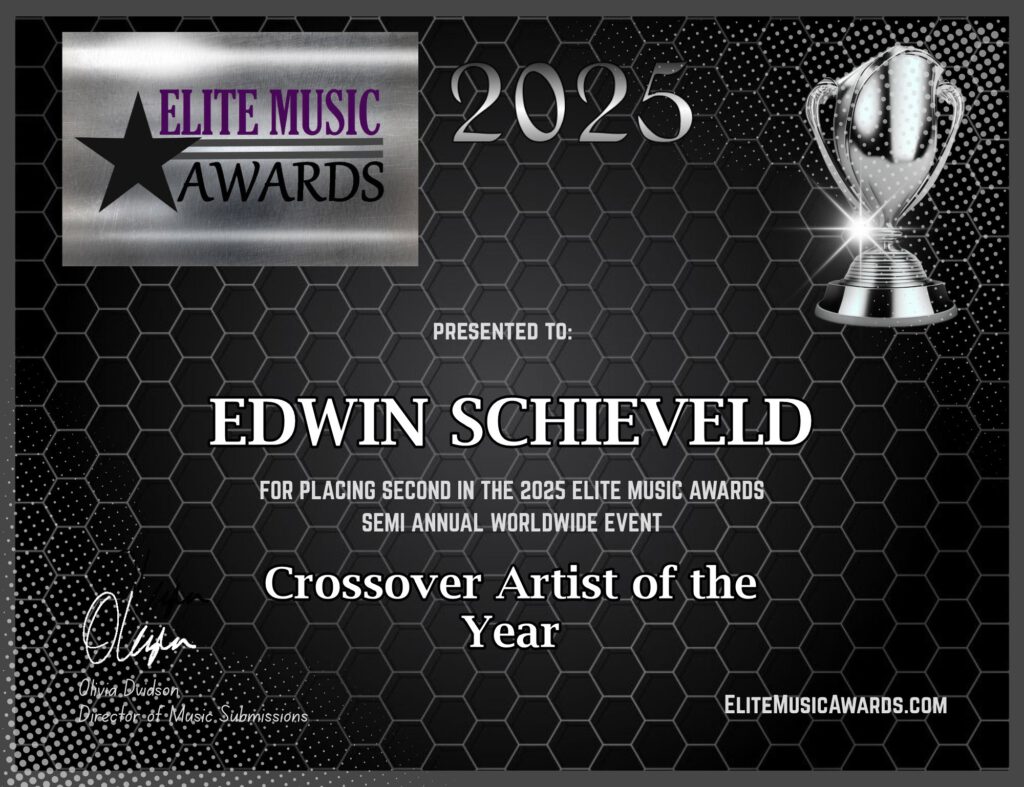
That's why I was surprisingly happy to finish 2nd as a Crossover artist in the Top 10 "Crossover Artist of the Year" at The Elite Music Awards - New York.
For me it means that this is a reward but especcialy a recognition for your made music
Most of what I describe here below comes from my studies as “Music Producer”.
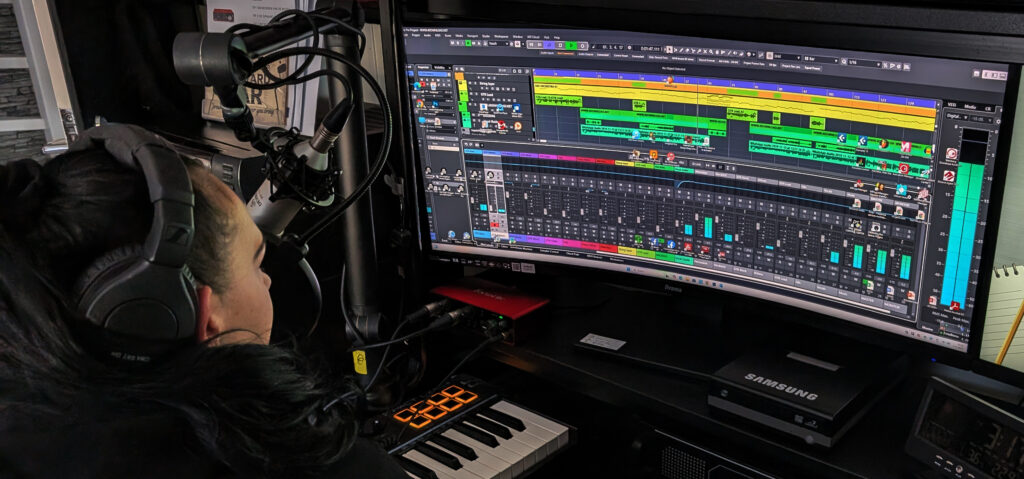
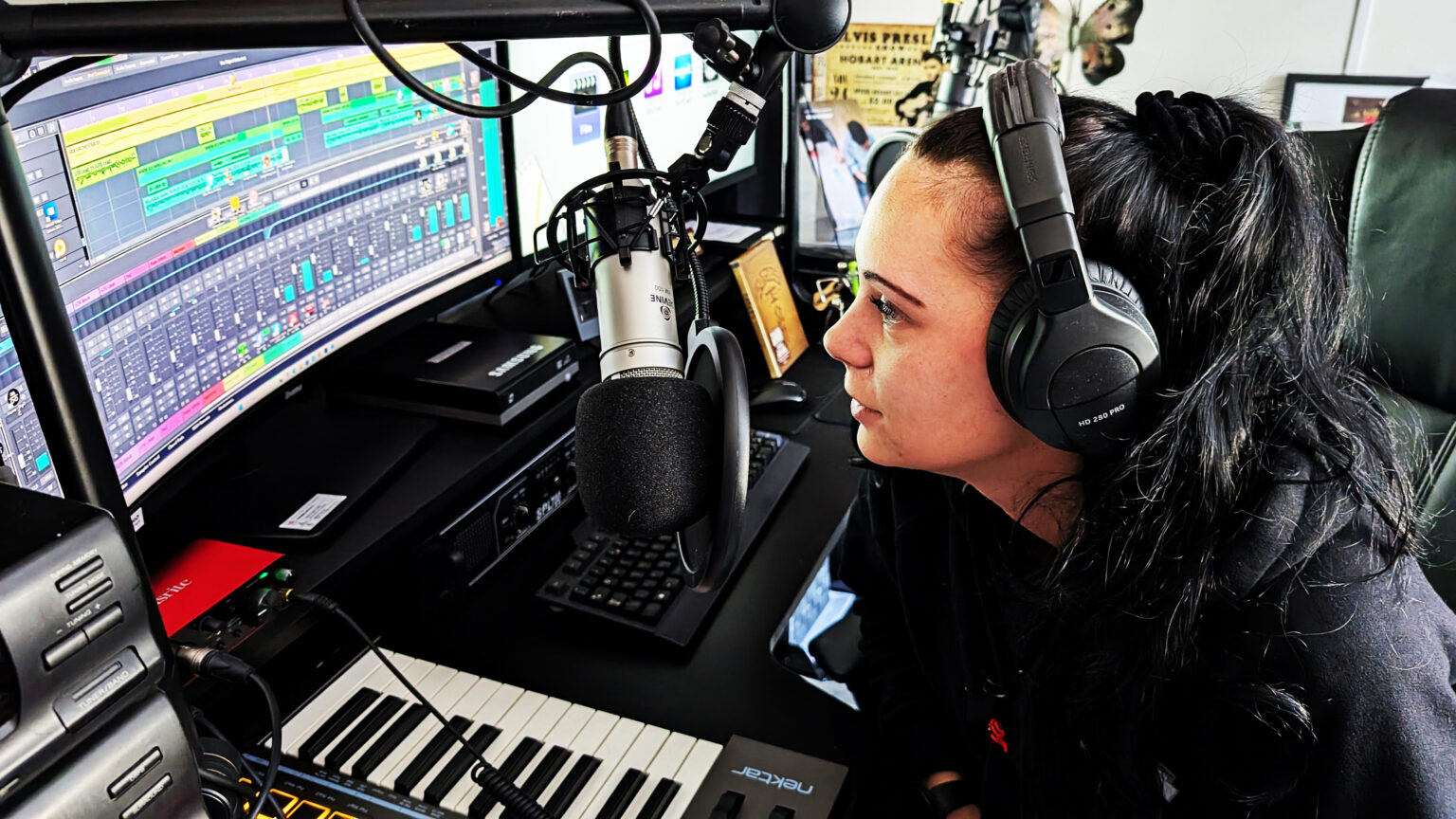
For making my own music I use standard loops and/or create my self homemade loops, either using my own instruments or created with FL Studio 21 software/Cubase 15.
I also use live vocals (Not AI). For the vocals, I do the lead-in singing (in a demo) as the melody should be in the piece. I don’t do the actual vocals, because I don’t sing in tune and ultimately leave it to the singer’s vocal skills. Where necessary I adjust the vocals with Cubase or FL Studio.
DAW: Digital Audio Workstation.
For making my music I use the following DAWs:
CuBase 15 (most of the time)
FL Studio 21 (regular)
Magix Music Maker ( sometimes)
See for more explanation Cubase, FL Studio & Magix
further below.
Popular and Professional DAWs:
Ableton Live: Very popular for electronic music and live performances.
Logic Pro: Exclusively for Mac users, popular with Mac producers.
FL Studio (Fruity Loops): Excellent for hip-hop and beatmaking.
Pro Tools: The industry standard in many professional studios,
especially for recording and post-production.
Cubase: An established name, strong for both composition and recording.
Studio One: Known for its ease of use and efficiency, popular with both
beginners and professionals.
Bitwig Studio: Praised for its flexible and innovative workflow.
Reason: Offers a unique virtual rack environment with many built-in
effects.
Other well-known brands:
Reaper
Cakewalk by BandLab
Magix (Samplitude/Music Maker)
Waveform (Tracktion)
For my recording I use:
Focusrite Scarlett 2i2 (Steinberg)
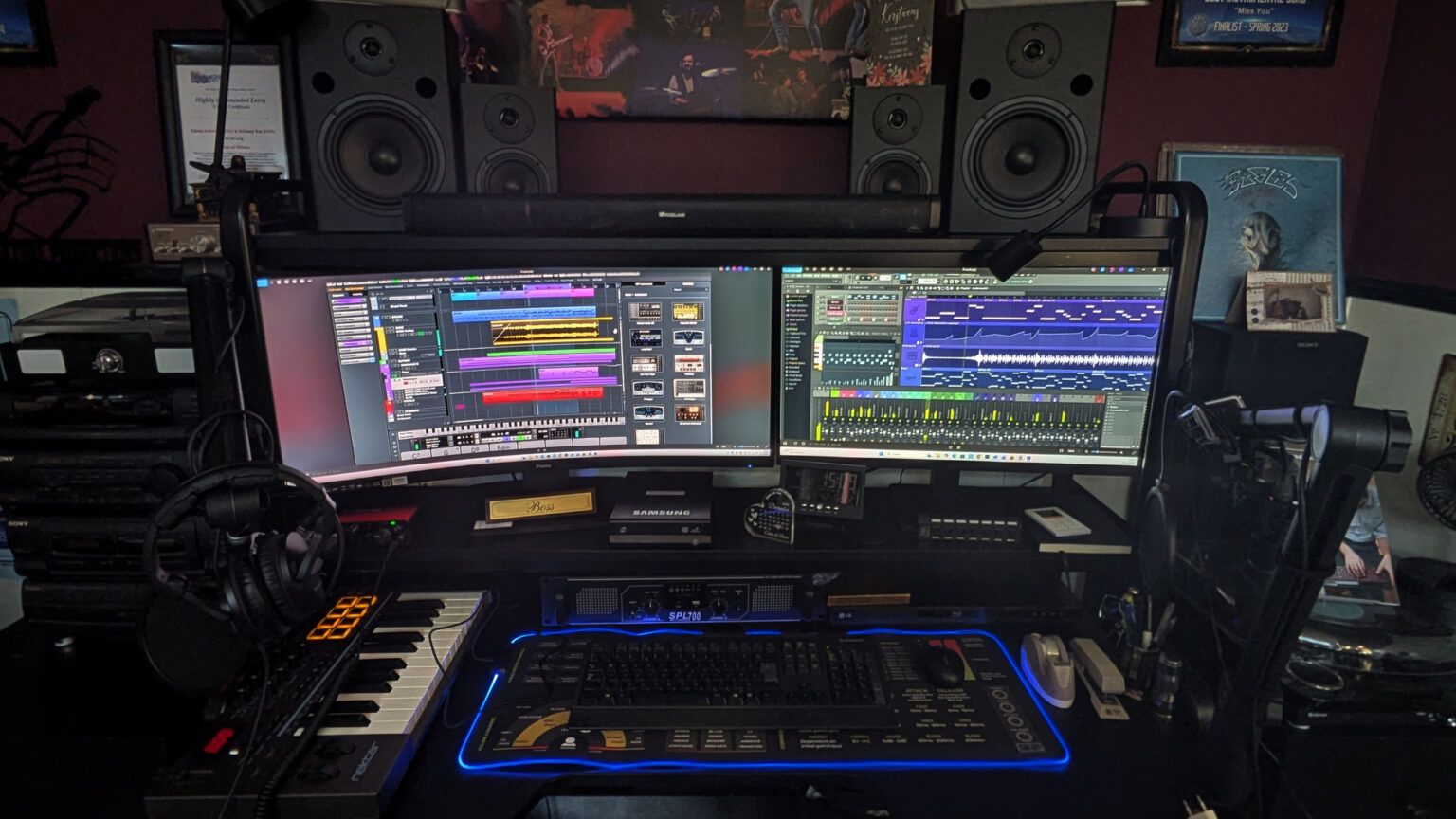
The biggest difference between Cubase and FL Studio lies in their workflows: Cubase has a traditional, linear approach, ideal for recording and mixing, with a steeper learning curve, while FL Studio has a pattern-based, visual workflow that excels in electronic music (EDM, hip-hop) and is easier for beginners.
Cubase is an all-around DAW for live recording, film, scores, and more, while FL Studio's strenght lies in loop-and sample based production and beat creation
Cubase
Workflow: Linear, traditional, excellent for recording and editing
live audio, vocals, and instruments.
Target Audience: Composers, live band recording, film scores,
professionals looking for a complete suite.
Interface: Extensive, professional, can be complex at first.
Power: Versatile, powerful mixing and editing tools, the studio
standard for many professionals.
FL Studio
Workflow: Pattern-based, visual, flow-based, ideal for rapid idea
generation.
Target audience: Electronic music producers (EDM, Hip-Hop),
beginners, beatmakers.
Interface: Intuitive, easy to learn, visually appealing.
Strengths: Beat making, loops, MIDI sequencing, excellent for
electronic genres, known from major EDM artists.
Magix Music Maker: is an easy-to-use, loop-based music software ideal for beginners and hobbyists, with an intuitive drag-and-drop interface, many built-in loops, and VST support. However, it’s less powerful than professional DAWs and can sometimes suffer from bugs and a limited mixer, although the “AI Song Maker” is a nice addition.
The software is a good choice for those who want to quickly make a beat without a steep learning curve, with a free basic version to try.